
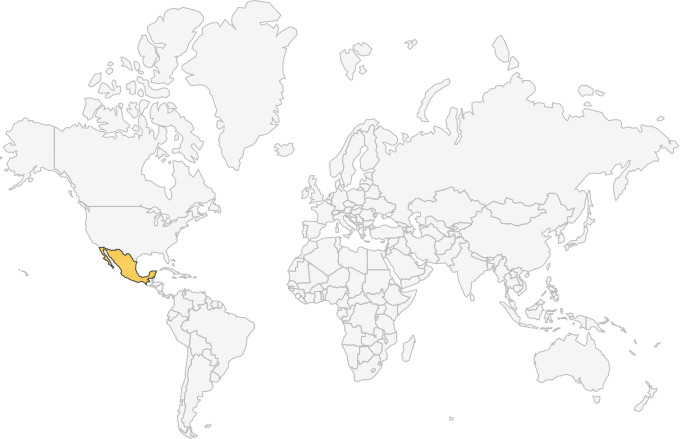
Mexico has clear surrogacy legislation in specific regions, primarily the state of Tabasco, making it one of the most legally secure destinations in Latin America. In these regulated states, surrogacy is altruistic — surrogates can only be reimbursed for medical costs, living expenses etc.
Surrogacy law in Mexico recognizes all family types — different-sex couples, LGBTQ+ families, and single parents have equal rights. In regulated states, surrogacy contracts are legally recognized, and intended parents can secure their parental rights via pre-birth court orders.
Mexico’s surrogacy-friendly states explicitly permit surrogacy for married couples, unmarried couples, same-sex couples, and single men and women. No discrimination based on sexual orientation or marital status.
Unlike some countries, Mexico doesn’t require medical proof of infertility. Whether you have medical reasons or personal choice for surrogacy, you’re welcome. Programs are based on your decision to become a parent, not medical necessity.
Birth certificates in Tabasco and Sinaloa list intended parents directly — no adoption, no court procedures. For LGBTQ+ couples, both partners can be listed on the birth certificate from day one (depending on home country recognition requirements).
You don’t need to be a Mexican resident. International families from USA, Canada, Europe, Asia, and beyond can access local surrogacy programs with full statutory protection.
According to COFEPRIS, there are about 52 registered assisted reproduction clinics across the country. Most fertility clinics are located in:
- Mexico City;
- Guadalajara;
- Cancún.
According to a study, 70–80% of surrogacy arrangements in Mexico involve thousands of Intended Parents from all over the world. Many of them are gay men from the U.S. and Europe.
Designed for women who can provide their own eggs but cannot carry a pregnancy. The package includes IVF procedures in an internationally recognized clinic, surrogate matching, full pregnancy support, delivery, and legal documentation coordination.

Ideal for families with frozen embryos from previous IVF cycles. We manage embryo transport to Mexico, surrogate matching, transfer in a certified medical facility, pregnancy monitoring, and all necessary legal processes.

This program is ideal for women of advanced reproductive age and other women who have some medical issues and can not produce eggs. It includes egg donation, IVF and embryo creation, surrogate matching, pregnancy monitoring, delivery, and legal documentation.

Our most comprehensive option with unlimited IVF attempts until birth. If the first egg donor transfer does not result in pregnancy, additional attempts continue at no extra cost, giving families full financial protection and peace of mind.

At HermanFamily Group, every gestational mother undergoes a thorough medical screening. We carefully review medical history, previous pregnancies, psychological health, and personal motivation. Our partner clinics maintain a pre-screened pool of surrogates, which helps minimize waiting time, allowing programs to begin within 2–4 weeks of enrollment.




Frequently Asked Questions about Surrogacy in Mexico
Yes, surrogacy is legal in Mexico, but only in certain states
Heterosexual couples, same-sex couples, and single parents are eligible.
From initial consultation through pregnancy and birth, the typical process takes around 15–18 months.
Throughout the process, intended parents receive support from our legal team, covering in vitro fertilization, embryo transfer, pregnancy monitoring, and birth documentation.
In surrogacy-friendly states of Mexico, such as Tabasco and Sinaloa, intended parents are recognized as the legal mother and father from birth. The surrogacy contract secures your parentage and ensures your names appear directly on the birth certificate.