

What is a cryobank and how does it function? The term “cryobank” refers broadly to any facility that collects and preserves human tissue. These can include embryos, blood, sperm cells, and eggs. In most cases, cryobanks are associated with storing frozen eggs or sperm cells from appropriate donors.
These cells can further be used
How does a cryobank work?
Simply put, cell samples are collected, processed, and put into vials for further freezing by a cryobank. Thereafter, vials are kept in liquid nitrogen containers at extremely low temperatures in special units capable of supporting temperature stability. Extreme temperatures stop the metabolism inside the cells. While they remain frozen, they don’t deteriorate and are resistant to exterior pathogens.

As a result, sperm or eggs can be stored forever in this condition and still function correctly after being thawed. Also, frozen samples don’t put couples attempting to conceive in any greater danger.
Also, the storage procedure at a cryobank involves thorough testing of every sample regularly to guarantee quality so that your samples are prepared when you decide on starting a family through IVF or other assisted reproduction technologies.
What can be stored in a cryobank?
Tissue freezing is the primary purpose and process of cryopreservation.
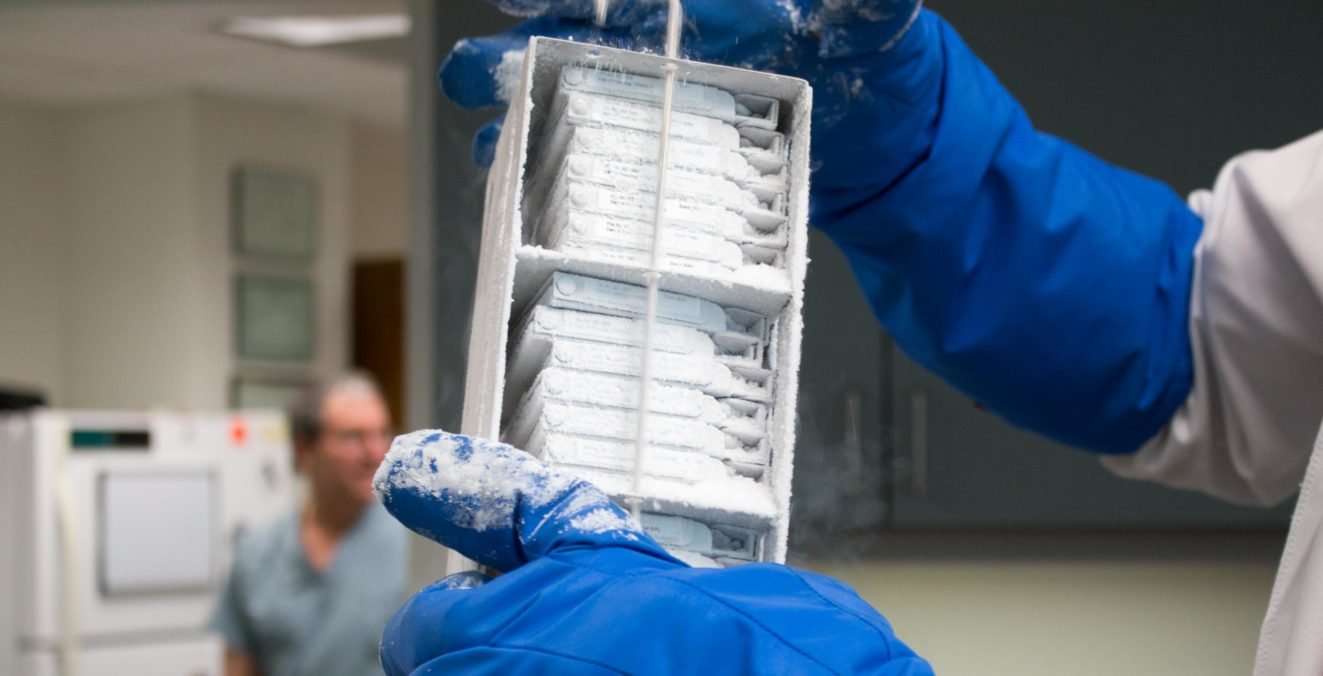
A cryobank is a place where cells are gathered, kept, and frozen. Different cryobanks can store specific cells or tissues for various purposes ‒ scientific research, for example, or, in the case of assisted reproduction technologies, for IVF and further embryo implantation.
For the latter purpose, cryobanks can store sperm cells, eggs, or even embryos. The “quality” of the tissues remains stable as every container is monitored 24/7.
Who can utilize cryobank services?
There are various reasons to freeze and keep sperm, eggs, or embryos in a cryobank for upcoming personal use. They include the following:
- an upcoming military deployment;
- you want to postpone starting a family until the time is right;
- you need to undergo medical treatment such as chemotherapy, radiation therapy, salpingectomy, or prostate surgery;
- you are considering or performing in vitro fertilization (IVF) and need regular access to stored tissues with your genetic material.
Also, certain cryobanks store other tissues and cells for scientific purposes ‒ research, laboratory testing, etc.
Alternative Uses of Cryobanks
Aside from reproductive purposes, cryobanks store stem cells, umbilical cord blood, and other biological materials for medical and research purposes. Stem cells preserved in cryobanks can be used for regenerative medicine, treating conditions like leukemia, anemia, and immune system disorders. Additionally, cryopreserved tissues and cells play a crucial role in experimental treatments, gene therapy, and drug development, offering potential breakthroughs in various medical fields.
Cryobanks are also used in veterinary medicine, allowing for the preservation of genetic material from endangered species, elite breeding animals, and pets. This application helps maintain biodiversity and supports conservation efforts.
Emotional and Psychological Aspects
Deciding to freeze eggs, sperm, or embryos can be an emotional process. Individuals and couples should consider counseling to understand the long-term implications of fertility preservation. Many clinics offer psychological support services to help navigate the emotional aspects of using cryobank services.
For individuals facing medical treatments such as chemotherapy or radiation, fertility preservation can bring peace of mind, ensuring they have the opportunity to start a family in the future. However, the process may also bring emotional challenges, such as anxiety over treatment success, ethical concerns, or the uncertainty of future parenthood.
Support groups, fertility specialists, and reproductive counselors can provide guidance, helping individuals and couples make informed decisions about cryopreservation. Understanding both the medical and emotional aspects of the process can contribute to a more positive experience and better preparation for the future.
Why choose cryobank?
Opting for cryobank services of eggs, sperm cells, and embryos can benefit couples who want to save their chance to conceive a healthy child as they delay the pregnancy for specific reasons.

A cryobank is a place where cells are gathered, kept, and frozen. Different cryobanks can store specific cells or tissues for various purposes ‒ scientific research, for example, or, in the case of assisted reproduction technologies, for IVF and further embryo implantation.9
For the latter purpose, cryobanks can store sperm cells, eggs, or even embryos. The “quality” of the tissues remains stable as every container is monitored 24/7.
Who can utilize cryobank services?
There are various reasons to freeze and keep sperm, eggs, or embryos in a cryobank for upcoming personal use. They include the following:
- an upcoming military deployment;
- you want to postpone starting a family until the time is right;
- you need to undergo medical treatment such as chemotherapy, radiation therapy, salpingectomy, or prostate surgery;
- you are considering or performing in vitro fertilization (IVF) and need regular access to stored tissues with your genetic material.
Also, certain cryobanks store other tissues and cells for scientific purposes ‒ research, laboratory testing, etc.
Alternative Uses of Cryobanks
Aside from reproductive purposes, cryobanks store stem cells, umbilical cord blood, and other biological materials for medical and research purposes. Stem cells preserved in cryobanks can be used for regenerative medicine, treating conditions like leukemia, anemia, and immune system disorders. Additionally, cryopreserved tissues and cells play a crucial role in experimental treatments, gene therapy, and drug development, offering potential breakthroughs in various medical fields.
Cryobanks are also used in veterinary medicine, allowing for the preservation of genetic material from endangered species, elite breeding animals, and pets. This application helps maintain biodiversity and supports conservation efforts.
Emotional and Psychological Aspects
Deciding to freeze eggs, sperm, or embryos can be an emotional process. Individuals and couples should consider counseling to understand the long-term implications of fertility preservation. Many clinics offer psychological support services to help navigate the emotional aspects of using cryobank services.
For individuals facing medical treatments such as chemotherapy or radiation, fertility preservation can bring peace of mind, ensuring they have the opportunity to start a family in the future. However, the process may also bring emotional challenges, such as anxiety over treatment success, ethical concerns, or the uncertainty of future parenthood.
Support groups, fertility specialists, and reproductive counselors can provide guidance, helping individuals and couples make informed decisions about cryopreservation. Understanding both the medical and emotional aspects of the process can contribute to a more positive experience and better preparation for the future.
Why choose cryobank?
Opting for cryobank services of eggs, sperm cells, and embryos can benefit couples who want to save their chance to conceivea healthy child as they delay the pregnancy for specific reasons.