
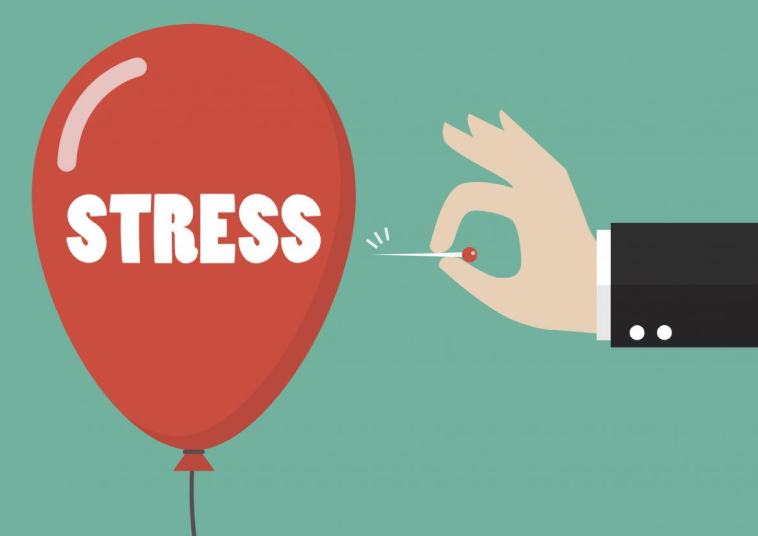
From year to year, scientists find more proves confirming the interconnection between stress, depression-related conditions, anxiety and inability to get pregnant.
What is stress?

Stress is the condition that develops in response to mental tension that a person may experience due to challenging life situations. Experts say that almost any situation in which a person feels extreme emotional excitement may cause stress.From time to time, every person faces various events and situations that are hard to cope with and that cause issues. It results in emotional reactions involving physiological and psychological disturbances. In such conditions, our body reacts with a number of adjusting and coping reactions. In this way, our naturally smart body is trying to protect itself. But it is not always possible to cope with stress and such a condition may cause a number of diseases.
There are some typical characteristics of stress:
- Women experience stressful situations more often than men;
- In women, stress more often involves emotional breakdowns and depressions. It may be related to the fact that women are more emotional than men;
- Stress causes the release of adrenaline and norepinephrine;
- When stress is still developing, all our body systems operate in enhanced mode.
If the impact is not prolonged or severe, stress may be beneficial and become a kind of exercise for the body. However, when the impact factors are severe, stress develops into pathological form, i.e. distress phase. Distress may cause increased irritability, headaches, migraines and digestive disorders. It may also lead to some conditions such as depression, chronic fatigue syndrome, peptic ulcer disease, gastritis, cardiovascular disorders. Stress may cause sexual dysfunction both in women and men.
The notion of stress-induced infertility

Lately, obstetrician-genecologists pay more and more attention to the problem of stress-induced infertility or psychogenic infertility. This type of infertility is caused by mental disorders, and it is the cause of infertility in around 30% of all cases. Chronic psycho-emotional stresses, systematic acute psycho-emotional stresses play the key role in the development of primary stress-induced infertility, and they may become the trigger mechanism for the development of stress-induced infertility. At the same time, infertility is an extremely potent and chronic stress factor that usually severely affects women’s mental health.
Social factors associated with the development of stress-induced infertility is high-education level and jobs requiring high mental loads, sleep deprivation, the fast pace of life and high demands of the surrounding people, etc.
Amenorrhea, dysmenorrhea, and functional disorders of the menstrual cycle are closely related to psychosomatics and stress.
Social pressure and “reproductive abuse”

Society imposes a specific lifestyle on young people to follow and newly-created families often face inappropriate questions about giving birth to a child and from their friends, family and acquaintances and discussions of their physiological functions. The couples who faced some problems in pregnancy planning take any discussions of this problem hard, and it causes stress for them. This type of human behavior is called “reproductive abuse”.
Reproductive abuse is both domestic and social abuse aimed at limiting the reproductive functions of a person, their discussion and condemnation that causes mental destruction.
It is necessary to remember that any discussions of your physiological functions without your consent is violating your personal boundaries.
Cortisol and stress
When a person faces a stressful situation, the adrenal glands secrete cortisol, which is also sometimes called “stress hormone”. Its function is to help the person to cope with a stressful situation. Other vital functions of cortisol in our body include the following:
- Blood pressure regulation;
- Regulation of blood sugar levels;
- Metabolism regulation;
- Positive effect on human memory;
- Decreased activity of inflammatory processes in the body.
If the stress is severe and develops into the chronic phase, the adrenal glands may release the excessive amount of cortisol, and as a result of that they may “burn out”. It causes the deficit of cortisol in the body, and the person is unable to cope with stress. Doctors call this condition “adrenal fatigue”.
Sleepiness, increased appetite, sweets and fatty foods abuse, decrease in memory and difficulties with attention concentration. If the person often experiences stress, cortisol may facilitate the ageing processes in the body, as well as depress estrogen synthesis and increase fat deposition. Cortisol production suppresses the effect of serotonin and dopamine – happiness hormones, and it may lead to depression.
Besides the negative effect on human fertility, excessive levels of cortisol decrease the immunity and increase blood pressure that may result in a decrease in muscular weight, fat deposition in the abdominal area. All that affects the cholesterol level and development of diabetes that may lead to heart attacks and strokes.
Production of cortisol directly impacts on the synthesis of progesterone. If the body constantly releases increased amounts of cortisol, if a person is constantly suffering from long-term or even short-term stress, it affects the hormonal balance – the concentration of cortisol increases, and at the same time, the synthesis of progesterone reduces.
You may take the blood test in a laboratory to determine the cortisol levels in the blood. Before taking the test, it is important to follow some rules and protect yourself from stress for a few days, take the test before 10 am, preferably right after you wake up and on empty stomach. Only in this case, the results will be the most objective.
Essential function of progesterone in female fertility

Progesterone is the human reproductive hormone. Pregnenolone is associated with it and it’s molecule includes cholesterol. Progesterone is produced in corpus luteum in ovaries. Progesterone together with estradiol regulates a woman`s menstrual cycle.
In medicine, progesterone is used in hormone replacement therapy to treat the following disorders:
- dysmenorrhea and amenorrhea;
- endometriosis;
- menstrual cycle disorders;
- premenstrual syndrome;
- threat of abortion and uterine bleeding;
- infertility;
Progesterone facilitates the formation of advantageous conditions for the implantation of an inseminated egg and supports embryo development. It is produced by the corpus luteum after ovulation, and after fertilization, corpus luteum produces progesterone and later this function is performed by the placenta. Placenta produces progesterone until the child is born.
If in 14 days after ovulation, i.e. in the luteal phase, progesterone level is insufficient, even if the fertilization occurred, unfortunately, the embryo won’t develop.
Stress and male infertility issues
Stress is known to be one of the factors for male infertility. Usually, the main cause of male infertility is the poor-quality of sperm that may be caused by infectious diseases, traumas, bad habits, insufficient nutrition, hard working conditions, sedentary lifestyle, excessive physical loads and stress.
In men, cortisol (stress hormone) blocks the production of the most important male hormone crucial for fertility – testosterone.
In the last 20 years, the quality if male sperm decreased by two times.
Effective strategies to cope with stress
From the above, it’s clear how important it is to be able to cope with stress, and how strong its impact on our health can be. The effect of stress on female fertility is not a myth, it is proved by modern medicine. That is why, in order not to become one of the women in this 30% category, who suffer from constant chronic stress, it is necessary to follow some simple rules.
1. Don’t complicate everything and so not overestimate the events, don’t search for traps and pitfalls in people.
2. Remember that reality differs from the ideal and from the what we imagine.
3. Life circumstances always require reasonable compromising.
4. Do not forecast any failures and misfortunes.
5. Don’t be afraid and do not anticipate problems, don’t overthink your failures, because when you create emotional tension, it is possible that you make the negative events becomes more probable.
6. Don’t overcriticize yourself.
7. Don’t blame yourself for all the possible mistakes and failures.
8. Love yourself.
9. Search for positive features in your character.
10. Develop the feeling of self-dignity, self-respect, and recognize that you are valuable person.
Of course, those rules won’t automatically solve all your problems in life, but they help to let some problems go, develop a more harmonical perception of reality, cope with stress and feel happier.
Conclusion
The very reproductive system is not involved in the processes of body adaptation to challenging life conditions and stress but it may temporarily to provide the body with more support the vital functions in stressful conditions. If a woman has pathological fears for something, the blockage develops in all the systems including the reproductive one.
Cortisol – the hormone of stress – affects the woman’s ability to get pregnant. What is more, the correlation between cortisol and progesterone is scientifically proven. 30% of infertility cases are associated with psychological factors and stress.
Stress affects both male and female fertility. It is important to remember that if you experience any problems with conception, both partners should visit a doctor, because it may be cause both by male and female infertility.